My Own Hideaway in Jeju: The Journey of Tasman and a Camping Creator
- Kia
- 2026-11-12
- 분량10min
- 조회수 530Views
AI summarized the main points
AI-generated summary. Please refer to the full article for precise details.
The appeal of camping lies in the fact that there’s no set way to do it. You can pack only the essentials for a light trip, or load up on your favorite gear to create your own personal space. Some days you might want to stay close to the ocean, while other days you might want to venture deeper into the woods and fields. Camping becomes a completely different experience depending on what you bring and where you go.
That’s why the car plays such an important role in camping. It carries a variety of gear over long distances to your destination, and sometimes takes you on unpaved roads as well as paved ones. Once you arrive, the area around the car often becomes your living space for the day. The car isn’t just a means of transporting camping gear—it also shapes the comfort of your journey and even influences how you spend your time at your destination.
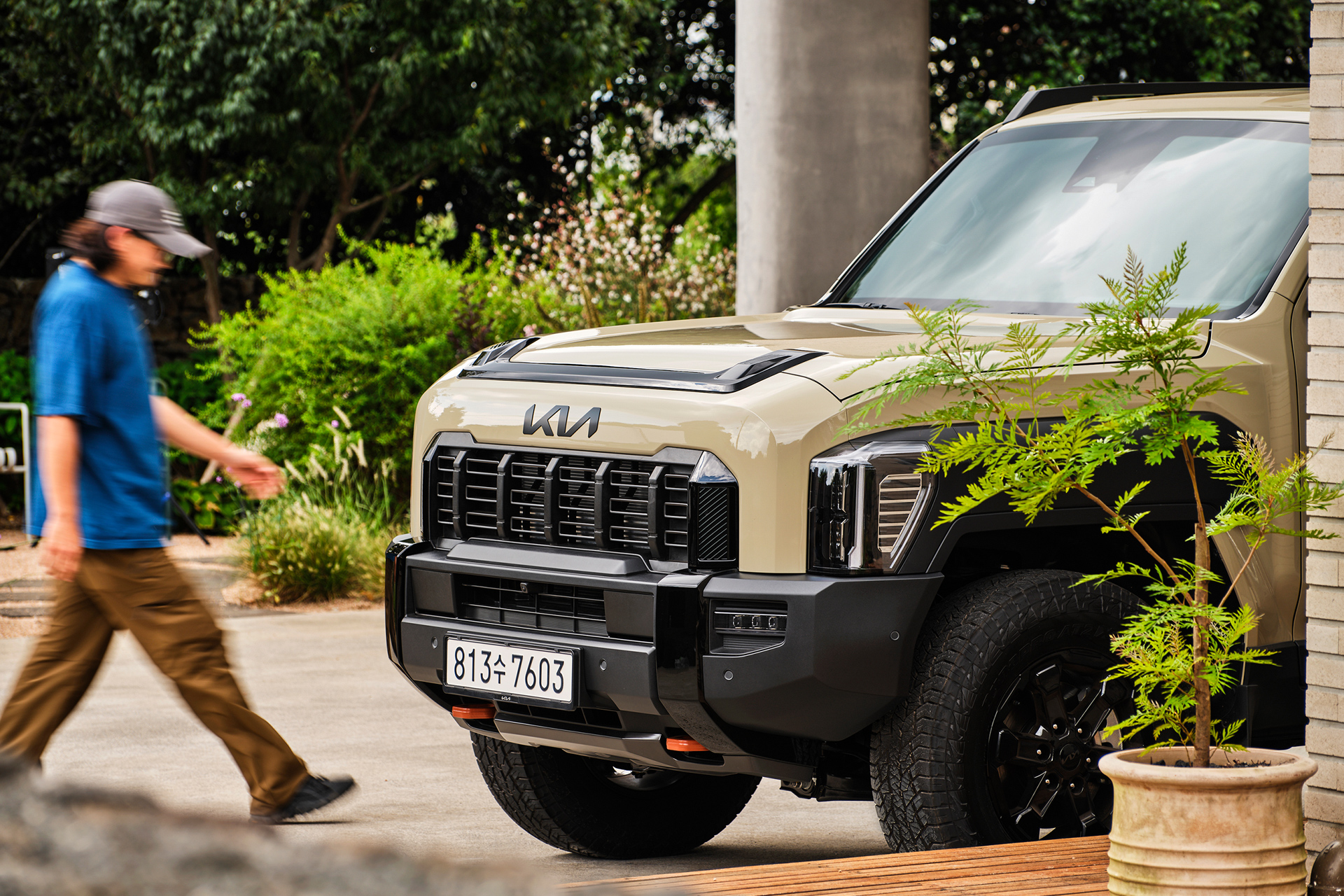
Jeju is a region where a variety of landscapes unfold as you travel—from roads stretching along the coastline to villages surrounded by low stone walls and forest trails lined with dense trees. Camping creator ACAM set out on a new camping journey in Jeju. The Kia Tasman, equipped with a spacious cargo area, accompanied him on this journey. Let’s follow his journey—from preparing for the trip to the routes he chose and the spaces he created at his destinations.
How to Start Camping in Jeju
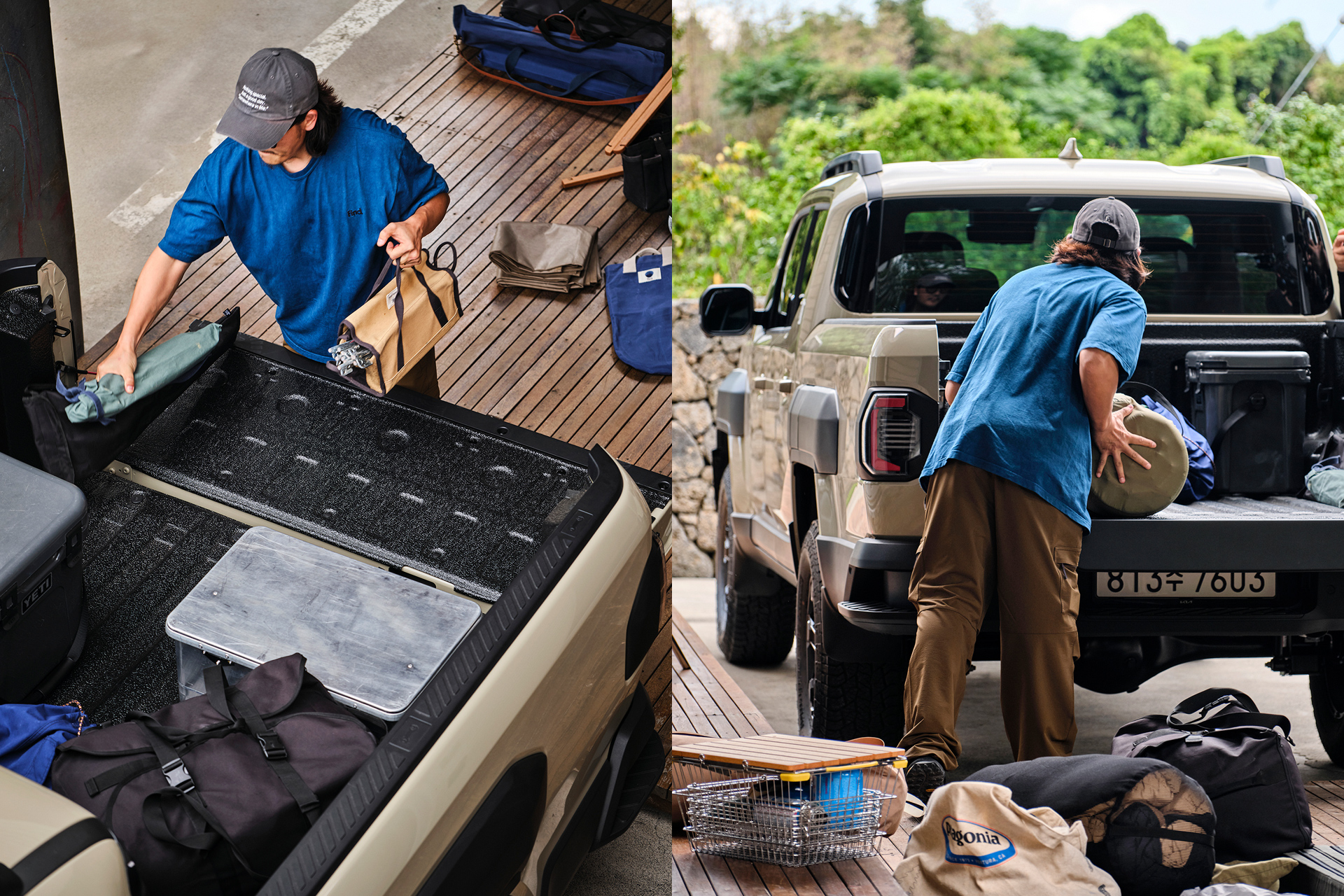
ACAM’s Jeju trip begins with preparing his gear. Even for those familiar with camping, there’s a lot to consider before setting off. Just as important as deciding what to bring is figuring out how much you can fit in the car. Small items—such as a table and cooking utensils for leisurely meals, lighting to brighten the night, or a comfortable chair for resting—can often set the tone for the entire camping experience.
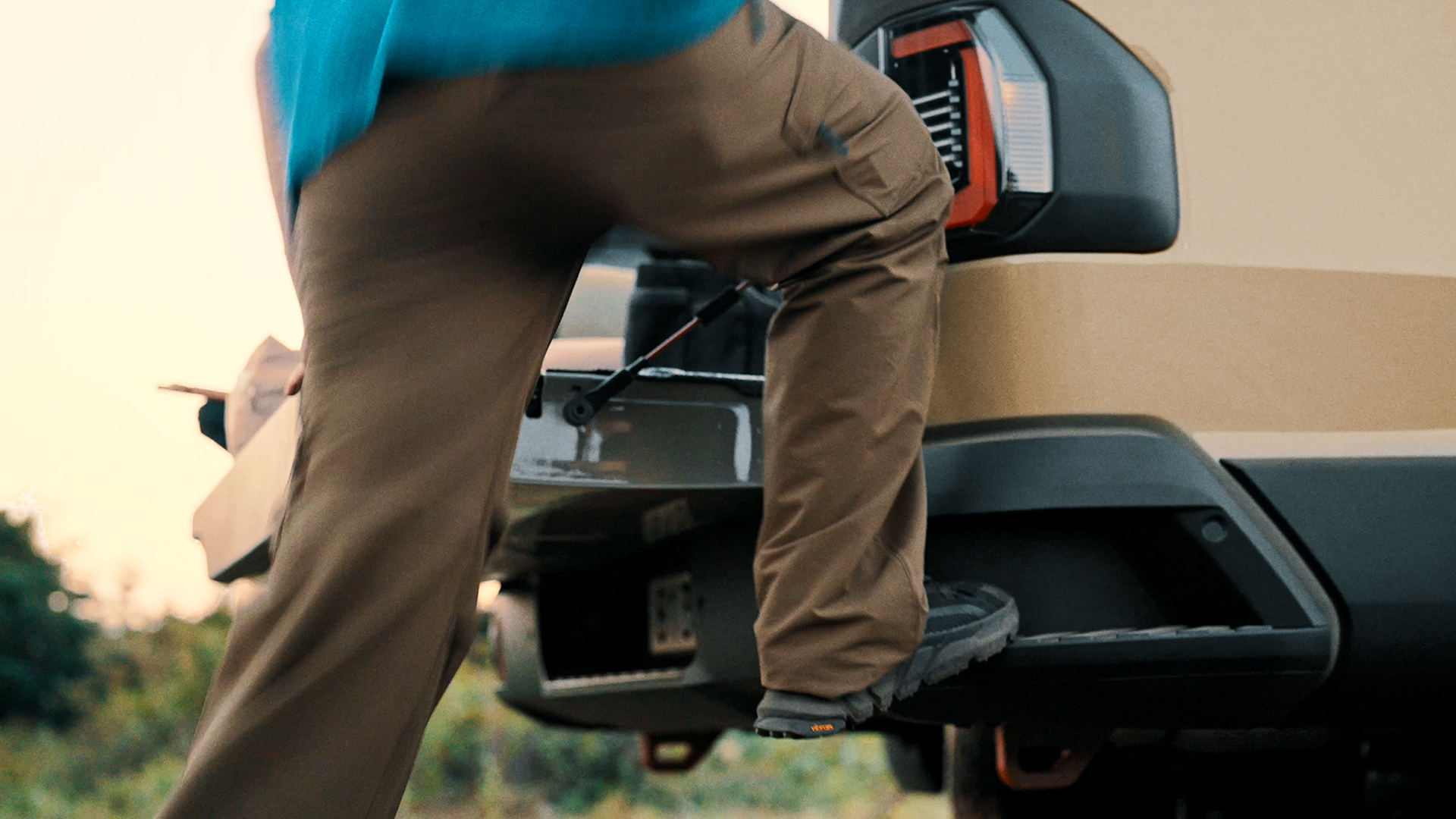
The Tasman is a pickup truck with a separate passenger compartment and cargo bed. With a bed measuring 1,512 mm long and 1,572 mm wide and a maximum payload capacity of 700 kg (2WD models, X-Pro 500kg), it easily accommodates not only bulky camping gear but also outdoor equipment that tends to get dirty with mud, sand, or moisture. The corner steps at the rear of the vehicle make it much easier to climb into the bed or take the items out from inside.
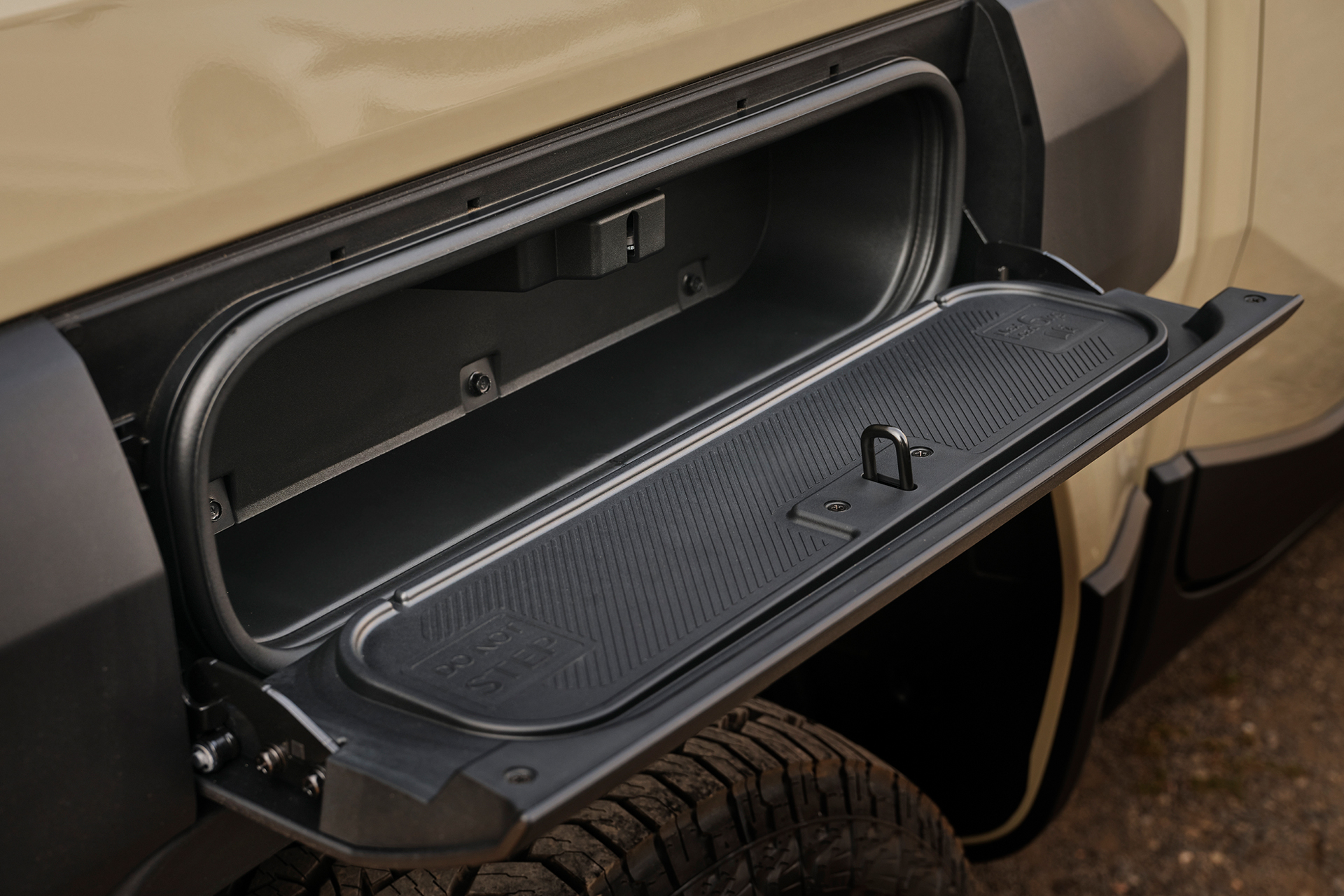
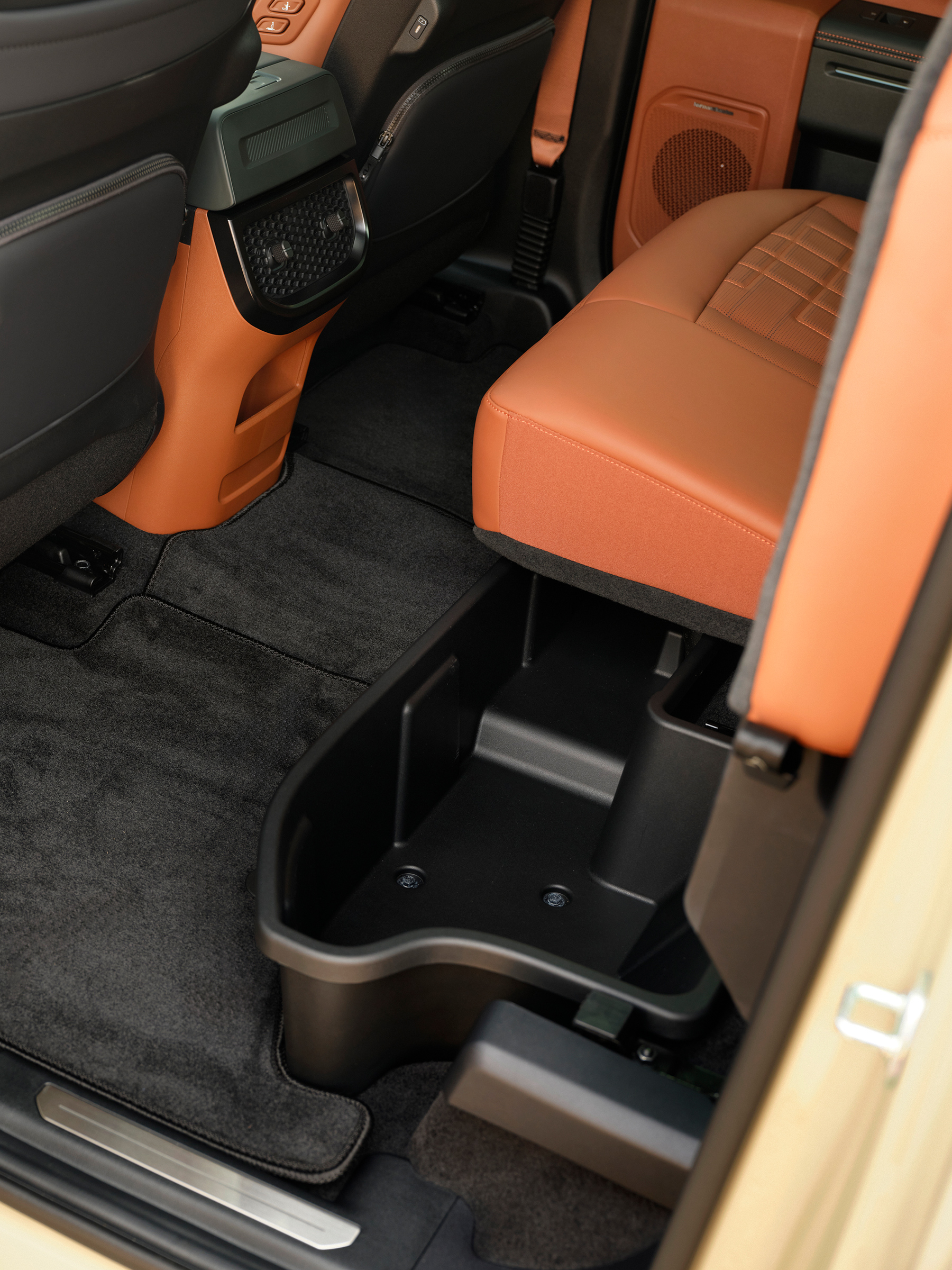
You can store frequently used items in the side storage compartments on the bed, while the storage space under the second-row seats in the cabin is perfect for small personal belongings. Even when loaded with plenty of camping gear, there’s no need to fold down the seats or sacrifice passenger space, so you can continue to enjoy the spacious interior throughout your trip.
This versatile cargo space also influences how you prepare for camping. Instead of scaling back your gear to fit the car’s limited space, you’ll have the freedom to pack everything you need for your preferred camping style. The sight of ACAM neatly filling the Tasman’s bed naturally demonstrates the unique advantages that arise the advantages a pickup truck brings to camping.
Driving the Roads of Jeju Is Part of the Journey
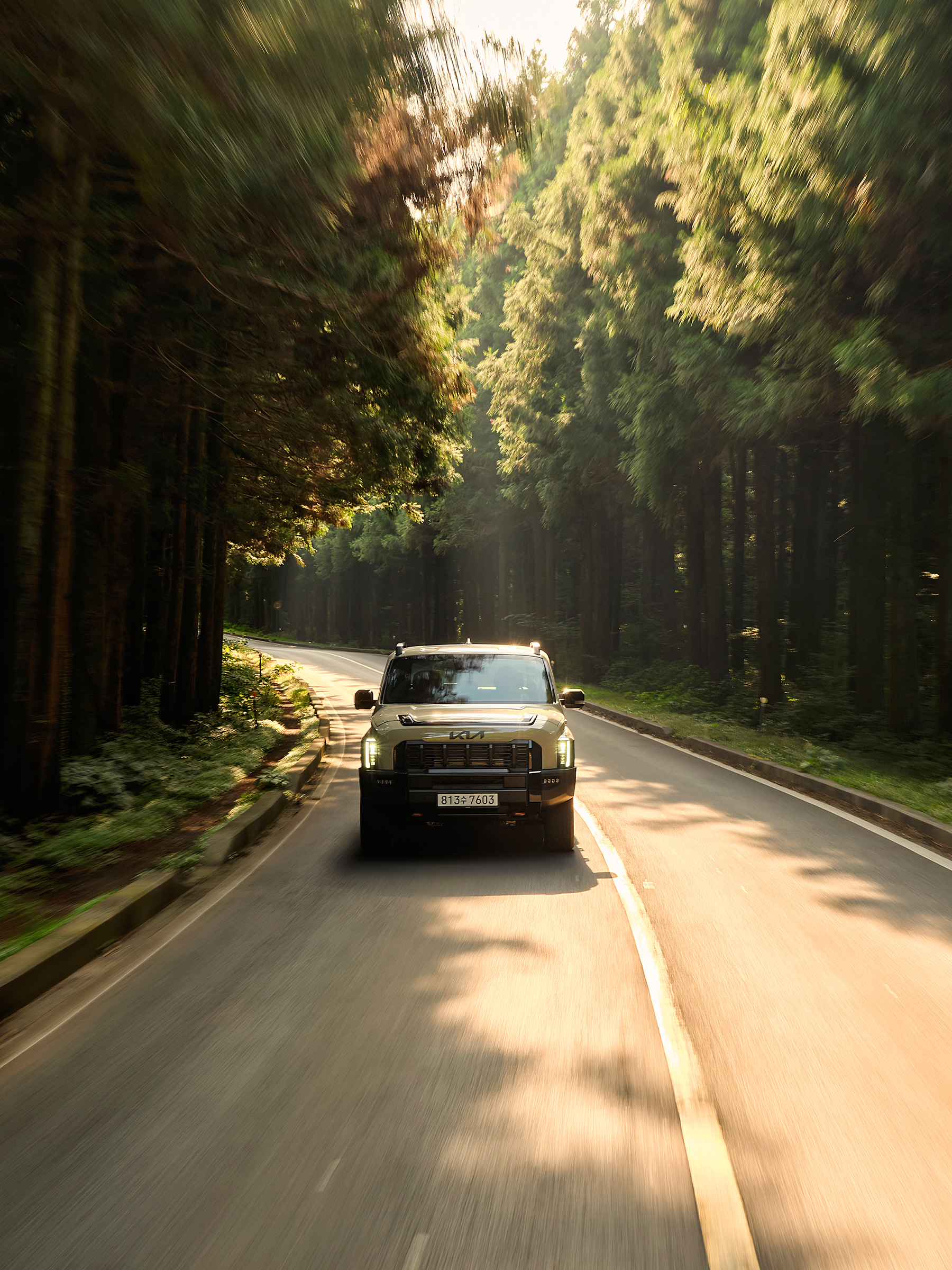
While the purpose of camping is to spend time in nature, the roads you traverse on the way are also an important part of the journey. Jeju is a place where the joy of the road is truly special: one moment you’re driving a coastal road with the blue sea stretching out along one side, and the next you enter a village lined with low basalt stone walls, and the whole mood of the landscape shifts at once. Through the car window, where the horizon was visible just moments ago, trees and green fields suddenly come into view.
ACAM and Tasman also continue their journey along Jeju’s diverse roads. As they head toward their destination, every moment of the drive is filled with new scenery—so much so that whenever they come across a road they like, they find themselves wanting to take a slight detour. This is why the driving experience offered by the car plays just as big a role in determining the satisfaction of a Jeju camping trip as the time spent at the campsite itself.
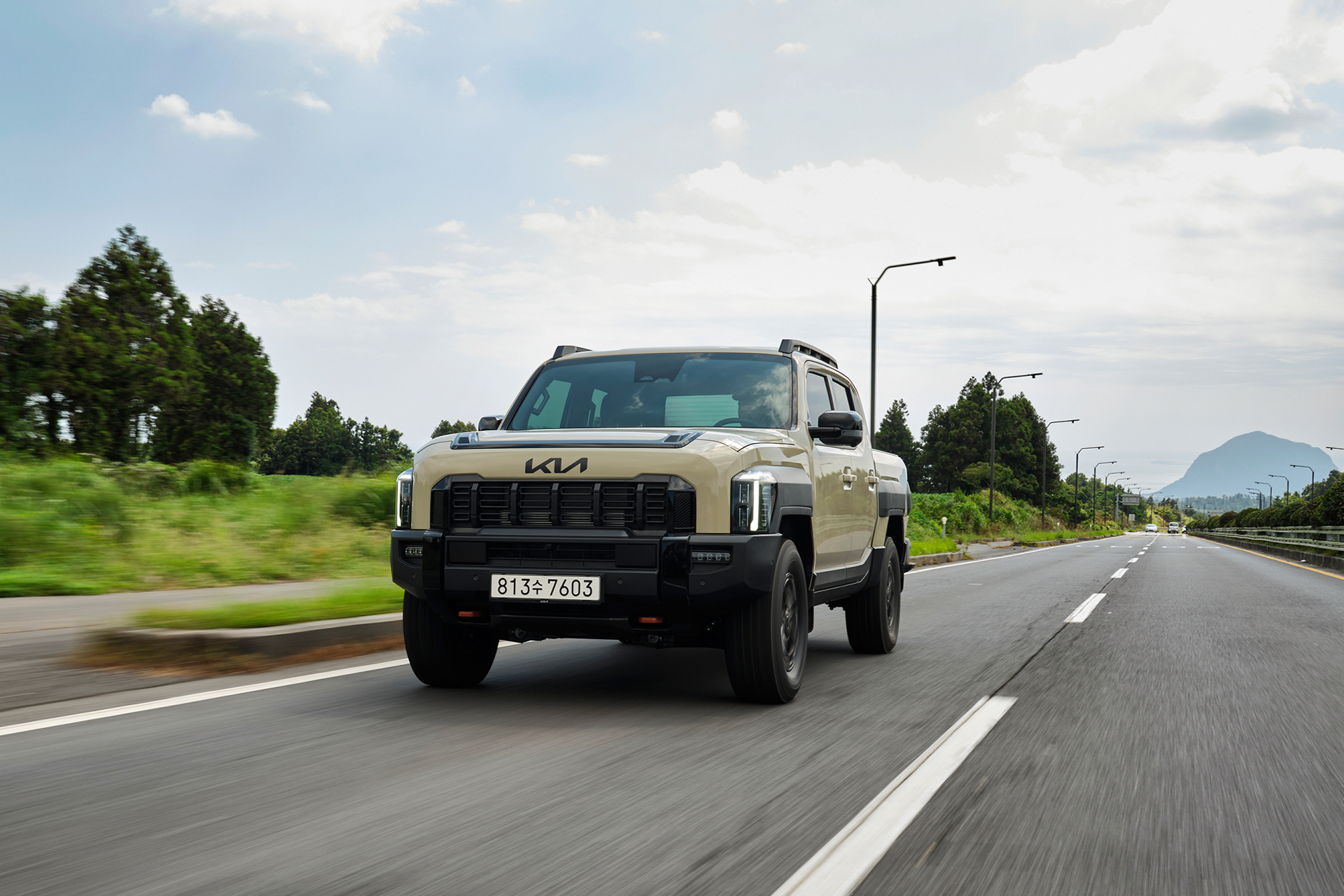
The Tasman is a true body-on-frame pickup truck. While pickup trucks are typically known for their ability to carry heavy loads or navigate rough terrain, the Tasman was developed with a strong emphasis on comfort and stability on everyday roads. It features a double-wishbone suspension system on the front wheels and a leaf spring suspension on the rear wheels, ensuring a balanced combination of load-carrying capacity and driving stability. Sophisticated vibration-reducing designs are also applied to the connections between the body and the suspension, effectively dampening shocks transmitted from the road surface while driving. The reason the Tasman pays such close attention to on-road driving is to expand the pickup truck’s domain beyond just work sites to everyday life and a wide variety of roads.
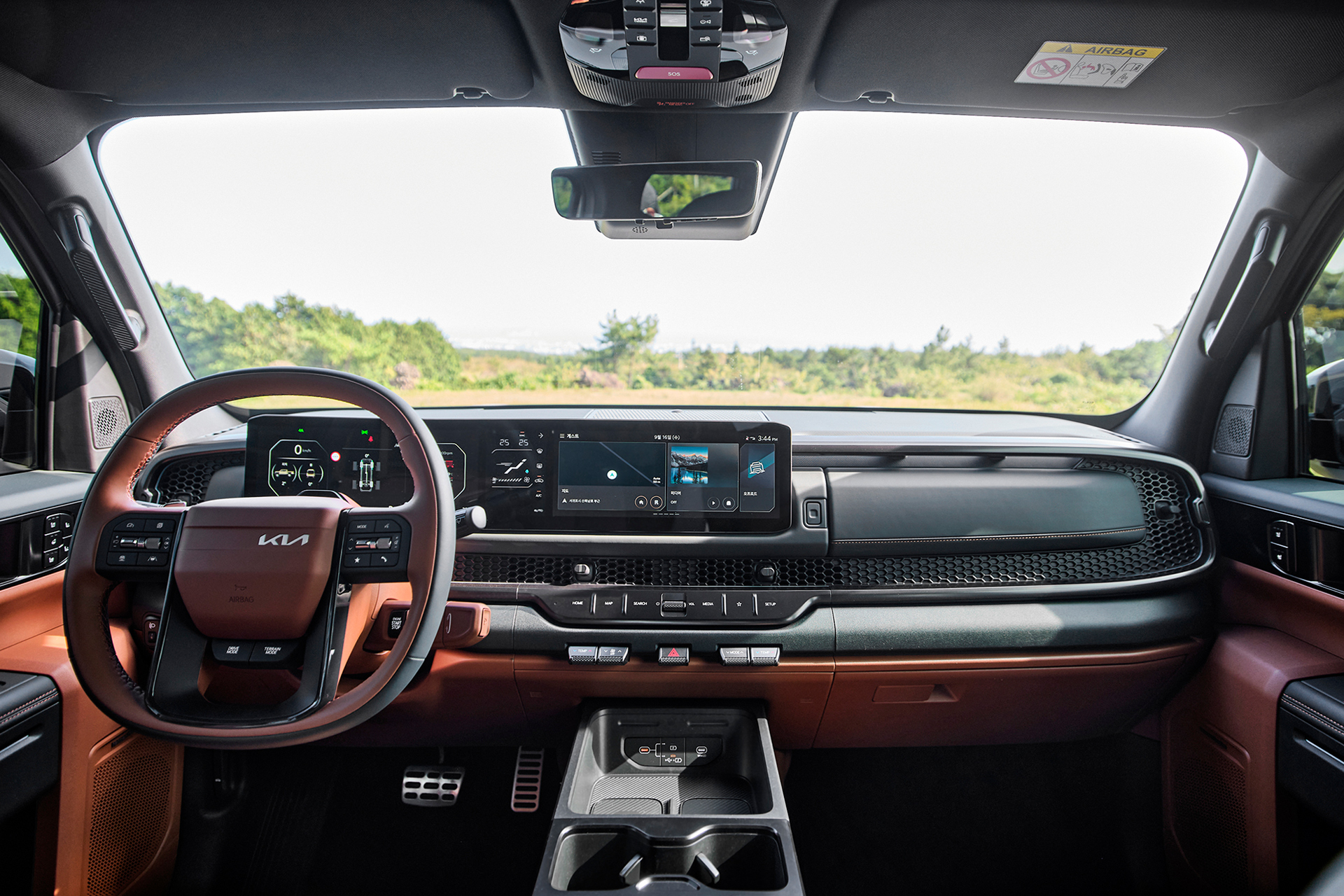
Comfort in the cabin is also crucial for long-distance travel. Since camping gear is loaded separately in the bed, the driver and passengers can make full use of the passenger compartment. The spacious interior and a driver’s seat layout designed for optimal visibility enhance comfort while on the move, and the Panoramic Wide Display allows you to check essential driving information at a glance. This ensures ample cargo capacity while providing a comfortable travel experience comparable to that of a standard passenger car.
However, not all roads on Jeju are smooth asphalt. As you pass by the sea and villages and head deeper into nature, you’ll encounter areas where the road surface becomes rough. It is precisely in these moments that another side of the Tasman’s capabilities shines.
A Journey Beyond Paved Roads
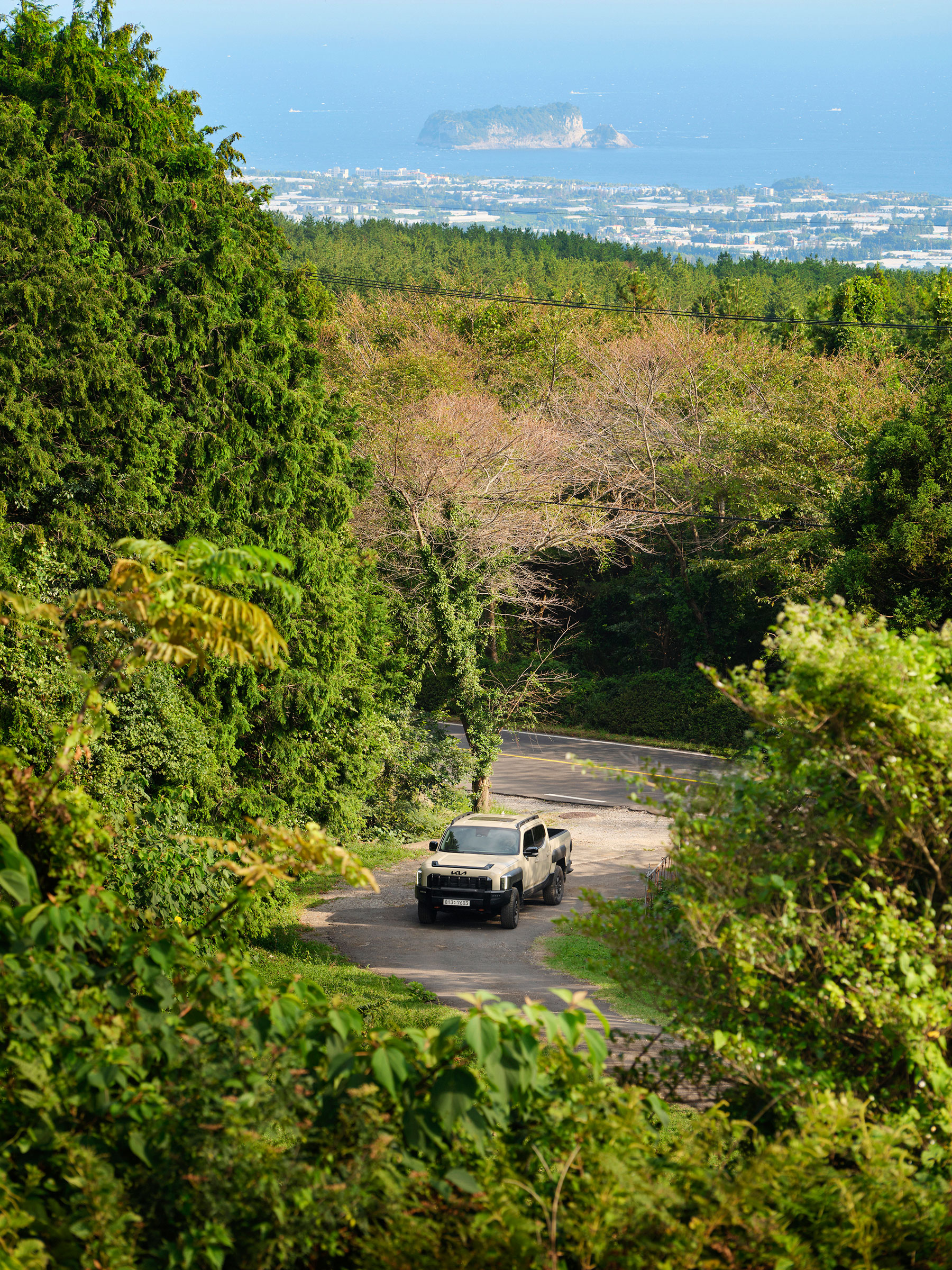
As the Tasman drives along Jeju’s smooth paved roads, a path mixed with dirt and rocks appears ahead. The road surface, which had been flat just moments ago, becomes uneven, and the car moves slowly to adapt to the surrounding terrain. The closer the journey takes ACAM to nature, the more varied the environments encountered along the way become.
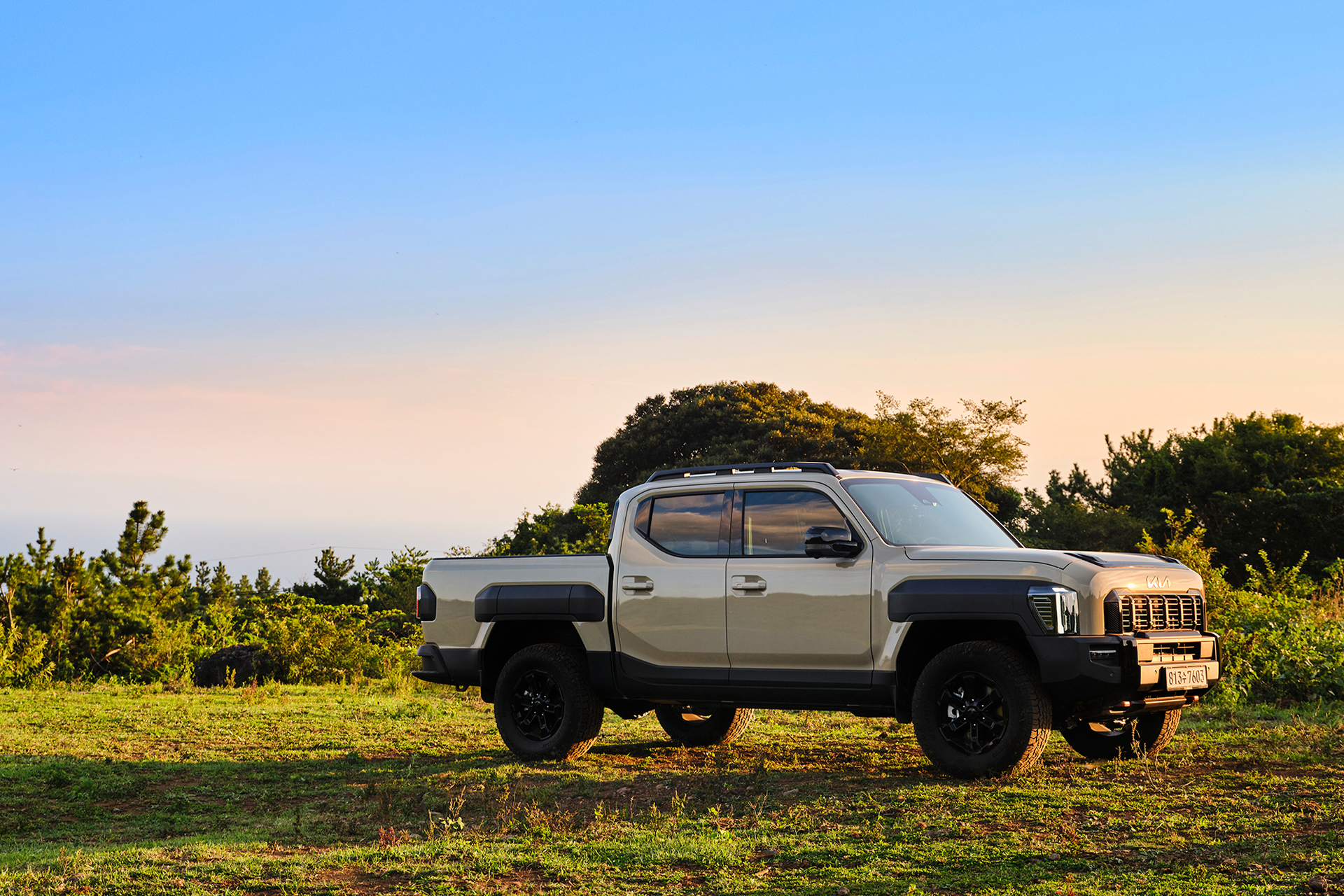
ACAM's vehicle for this journey is the Tasman X-Pro trim. Designed to enhance off-road performance, the X-Pro features a minimum ground clearance of 252 mm and is equipped with exclusive 17-inch wheels and all-terrain tires. The high ground clearance reduces the risk of the underbody scraping the ground on uneven terrain, while the all-terrain tires are designed for use on a variety of surfaces, including both paved and unpaved roads.
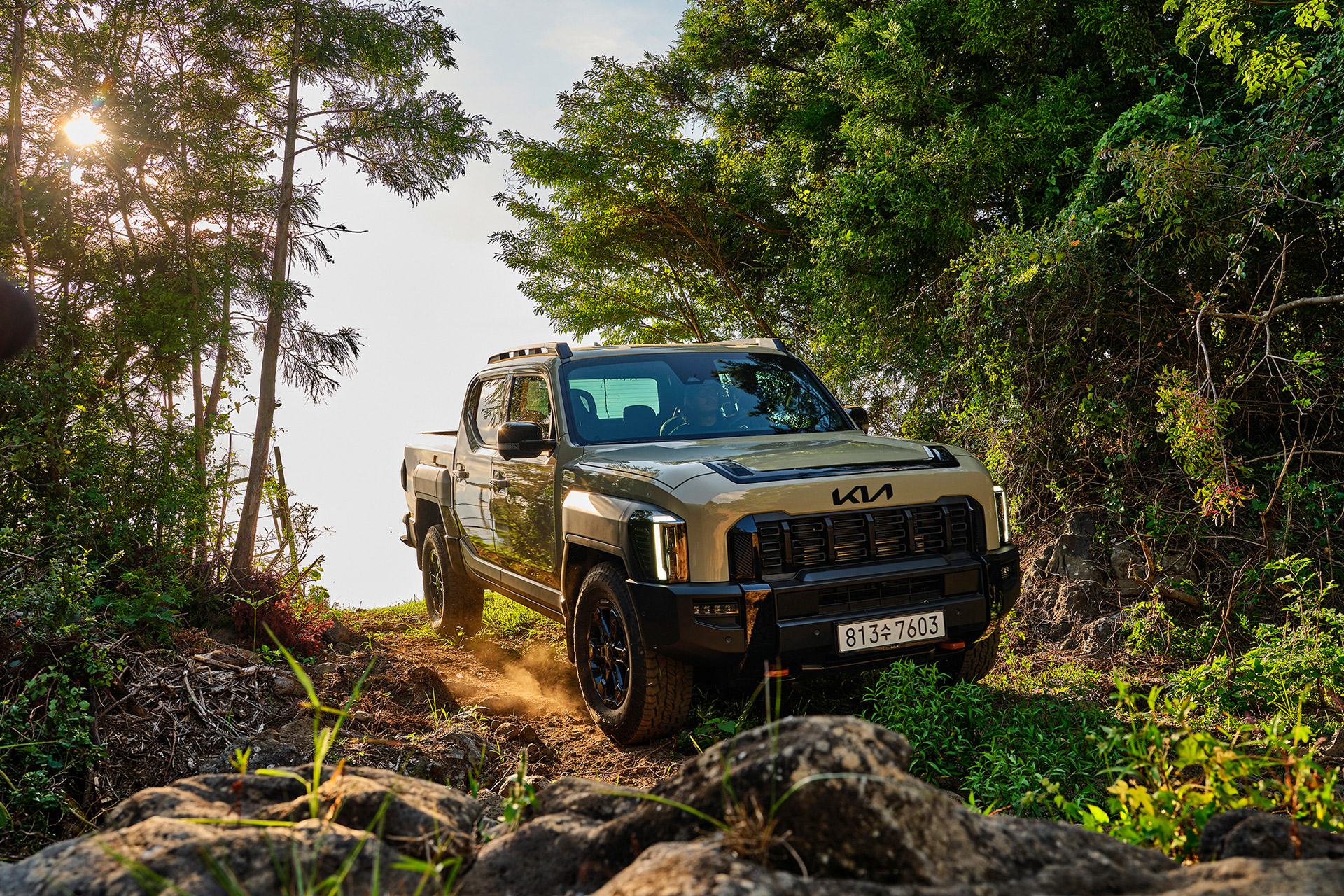
The electronic 4WD system distributes drive torque according to road conditions, and the Electronic Locking Differential (e-LD) ensures traction even when wheels spin, allowing the vehicle to navigate rough terrain. The Terrain Mode, which adjusts driving characteristics based on the terrain, includes Auto, Snow, Mud, and Sand modes, and the X-Pro model also features a Rock Mode designed for rocky terrain. X-TREK, which supports low-speed off-road driving, reduces the burden on the driver of repeatedly operating the accelerator and brake pedals, allowing them to focus on road conditions and steering.
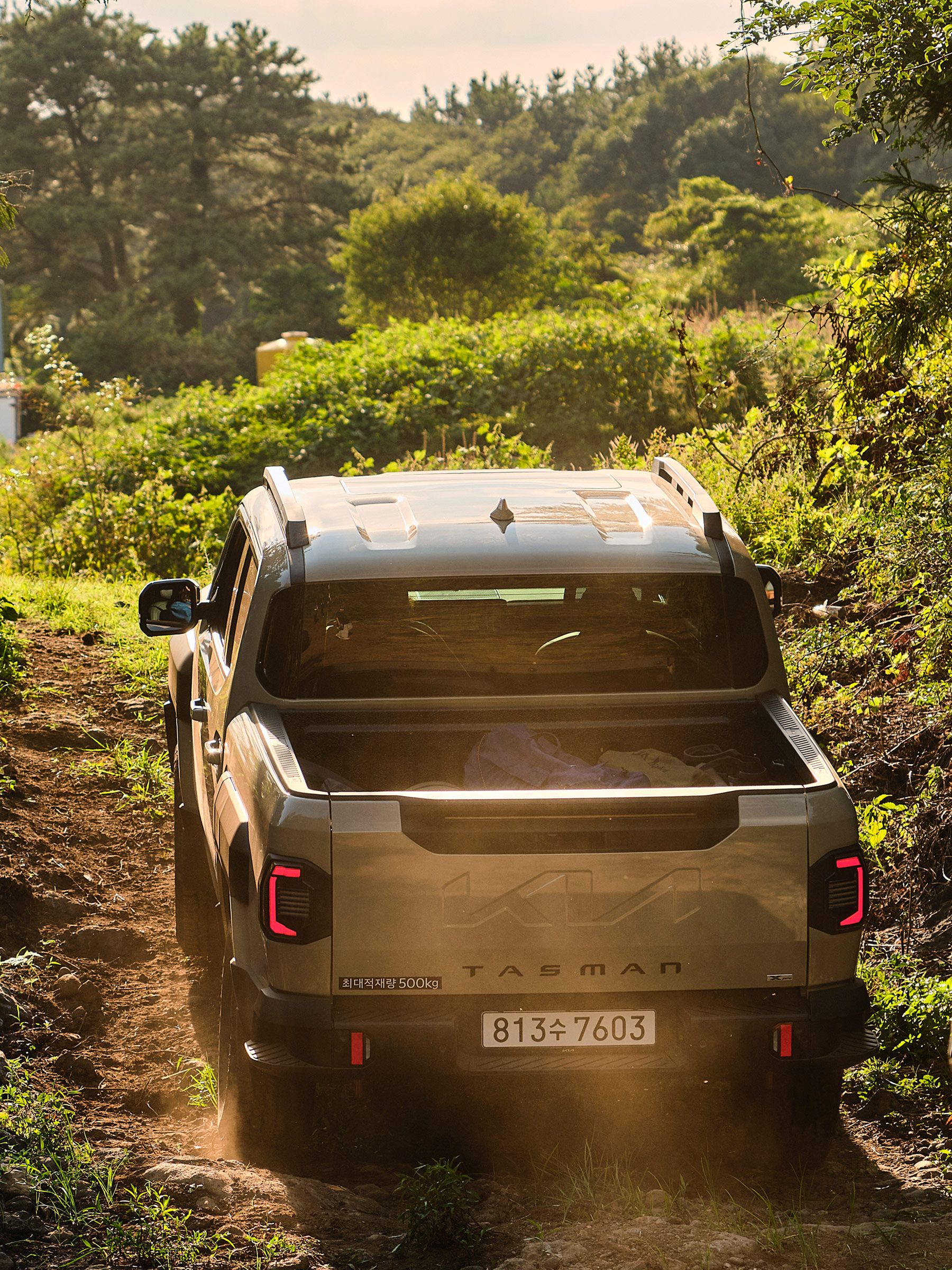
Of course, just because it has these features doesn’t mean you have to seek out rough terrain every time you go camping. Rather, what’s important is the ability to respond flexibly when encountering unexpected road conditions while driving on everyday roads. Whether the final stretch to your campsite is an unpaved road or road conditions change due to weather and terrain, the Tasman’s driving performance significantly reduces the stress of the journey.
Where the Road Ends, a New Space Begins
The Tasman comes to a stop upon arriving at its destination. As ACAM lowers the tailgate, the camping gear that traveled all the way to Jeju is revealed piece by piece. He takes out the tent, sets up the table and chairs, and places small accessories in their proper spots. As the neatly stacked gear is unpacked, a space to spend the day takes shape in the area that was empty just moments ago.
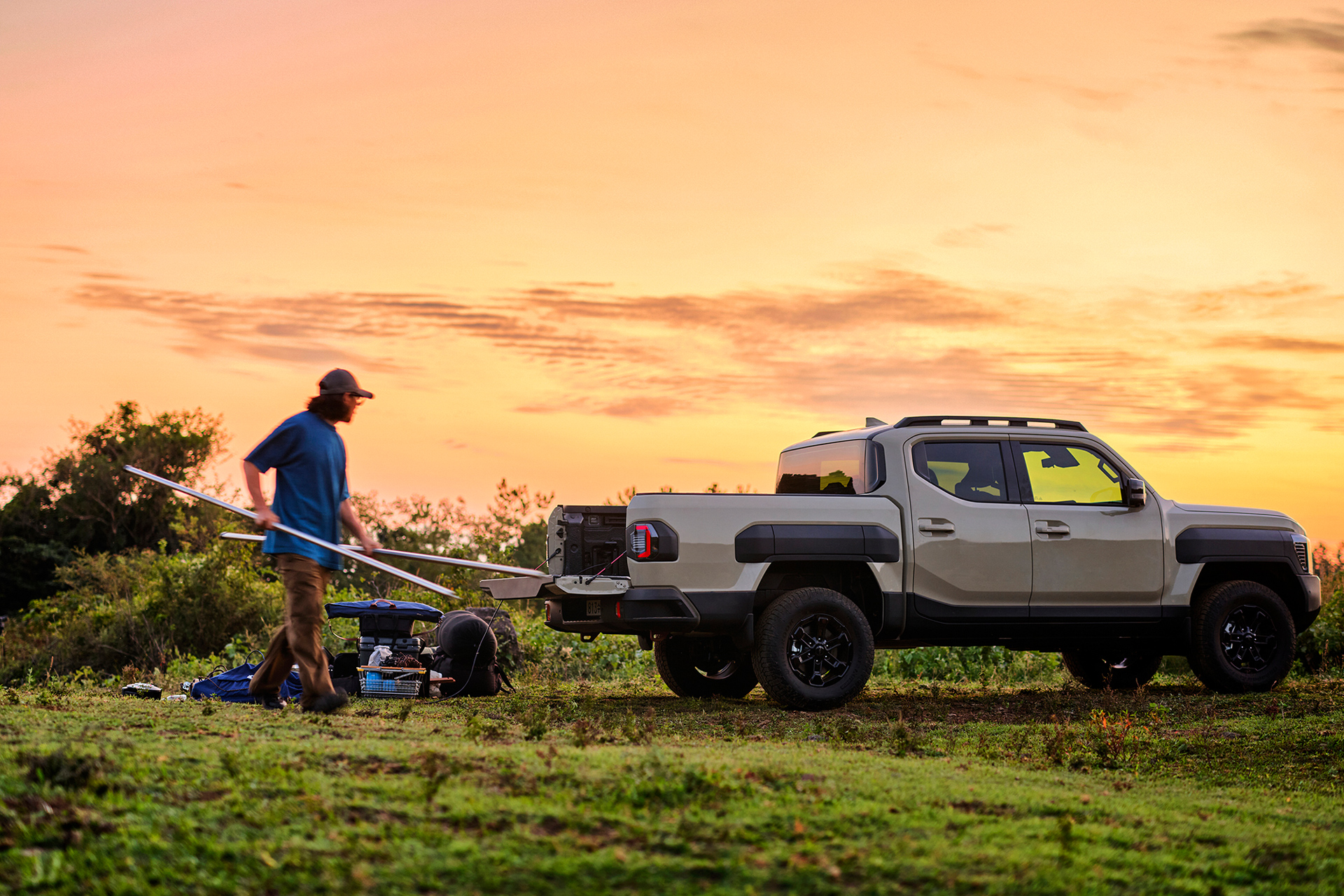
When setting up a campsite, how you use your gear matters more than how much you’ve brought. After deciding on the tent’s location and arranging the table and chairs, he places the essentials within easy reach. Even with the same gear, the atmosphere can be completely different depending on where and how you set it up. With Jeju’s scenery as a backdrop, ACAM gradually completes his ideal camping space, piece by piece.
-
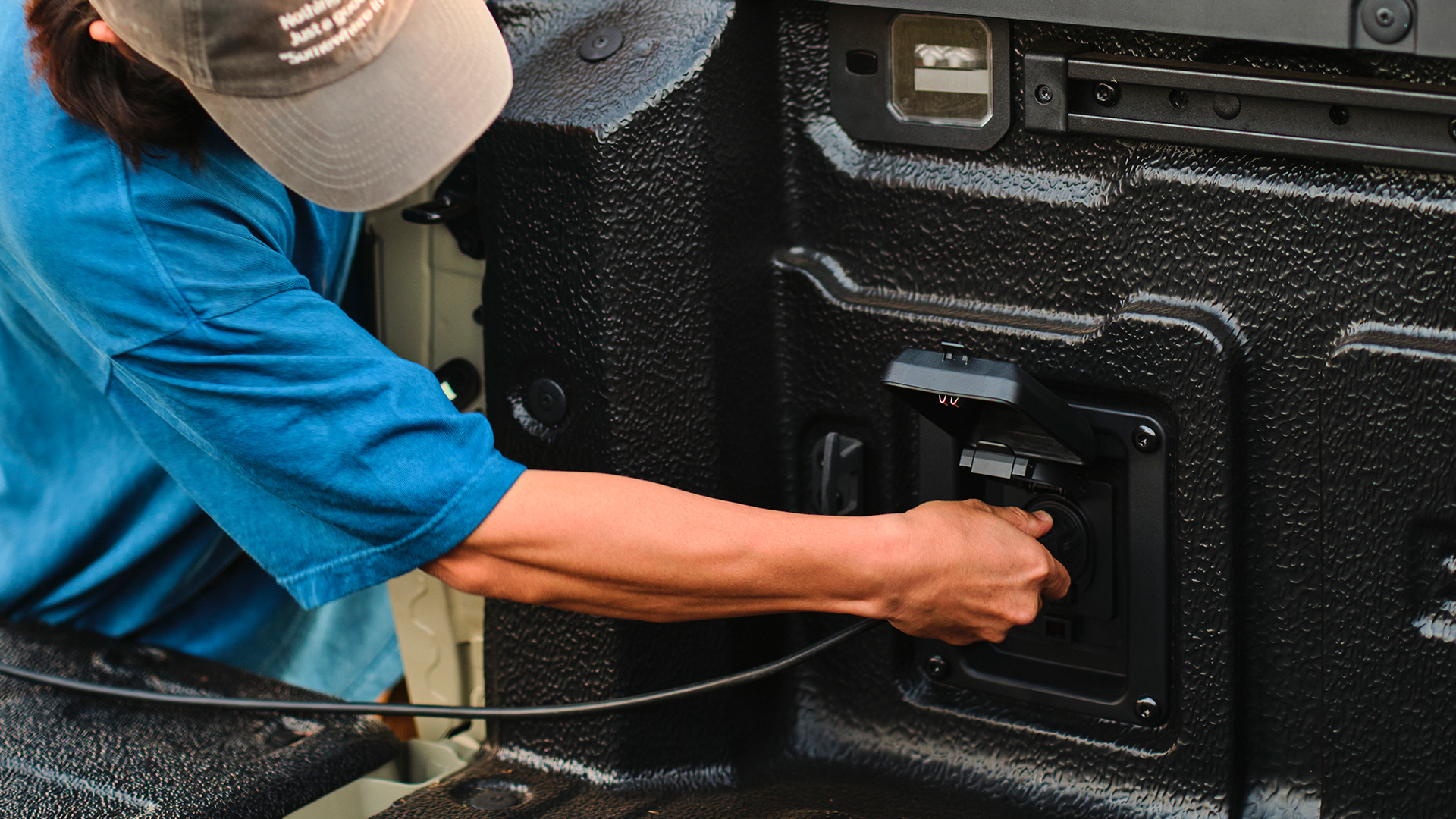
220V Inverter (Bed) -
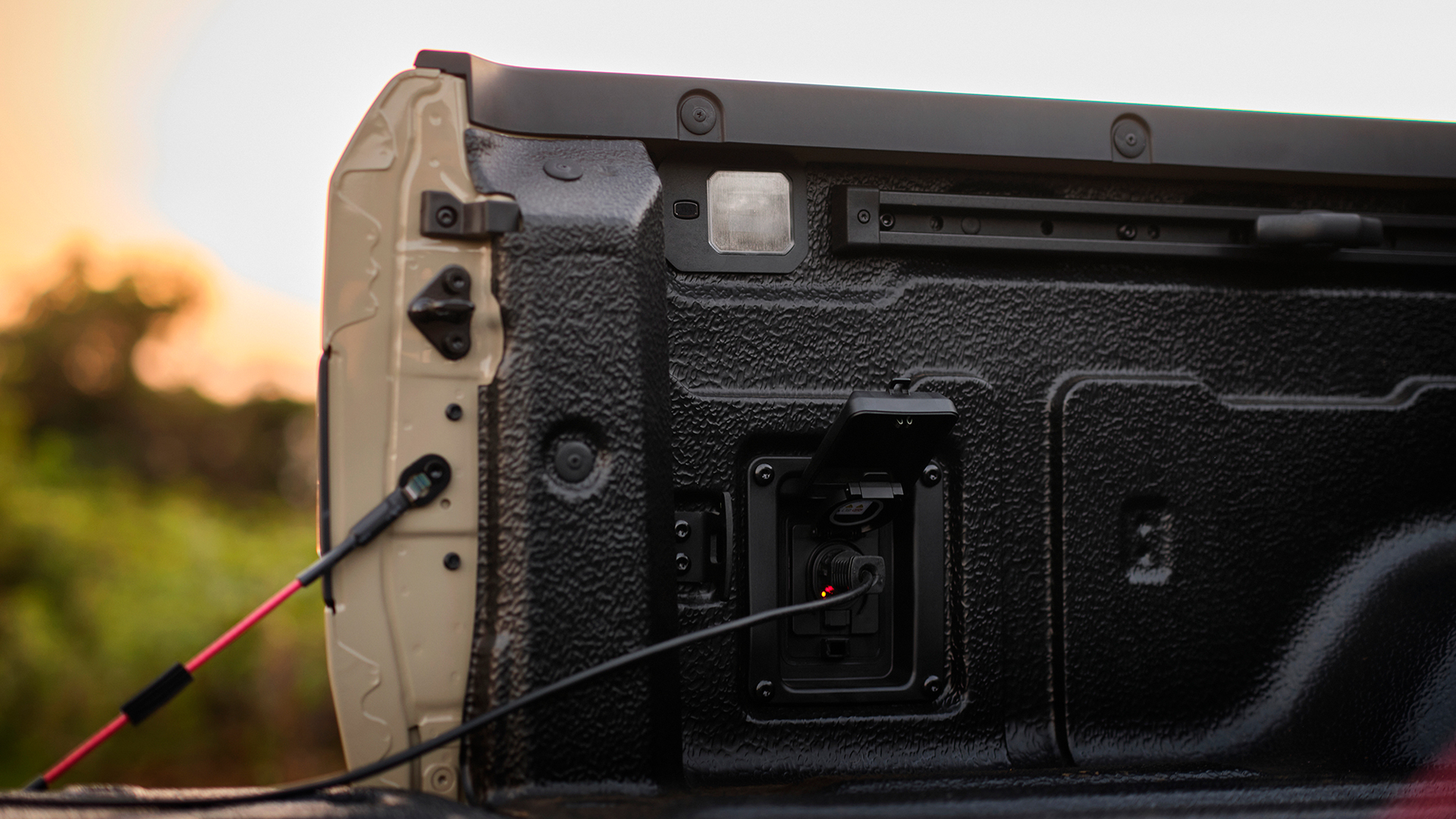
220V Inverter (Bed)
The convenience features built into the bed prove especially useful outdoors. After sunset, the LED bed lamp illuminates the storage area, allowing you to find necessary gear or organize your belongings, while the 220V inverter helps power equipment that requires electricity. The ability to draw power from your car even in areas without separate power sources is a highly valuable feature for outdoor activities.
While these features may not stand out as much as flashy gear, they make a small yet significant difference during actual camping trips. They eliminate the hassle of having to prepare separate lighting to find items after dark and provide a variety of options for situations where power is needed.
The Expanding Scope of Camping in Jeju
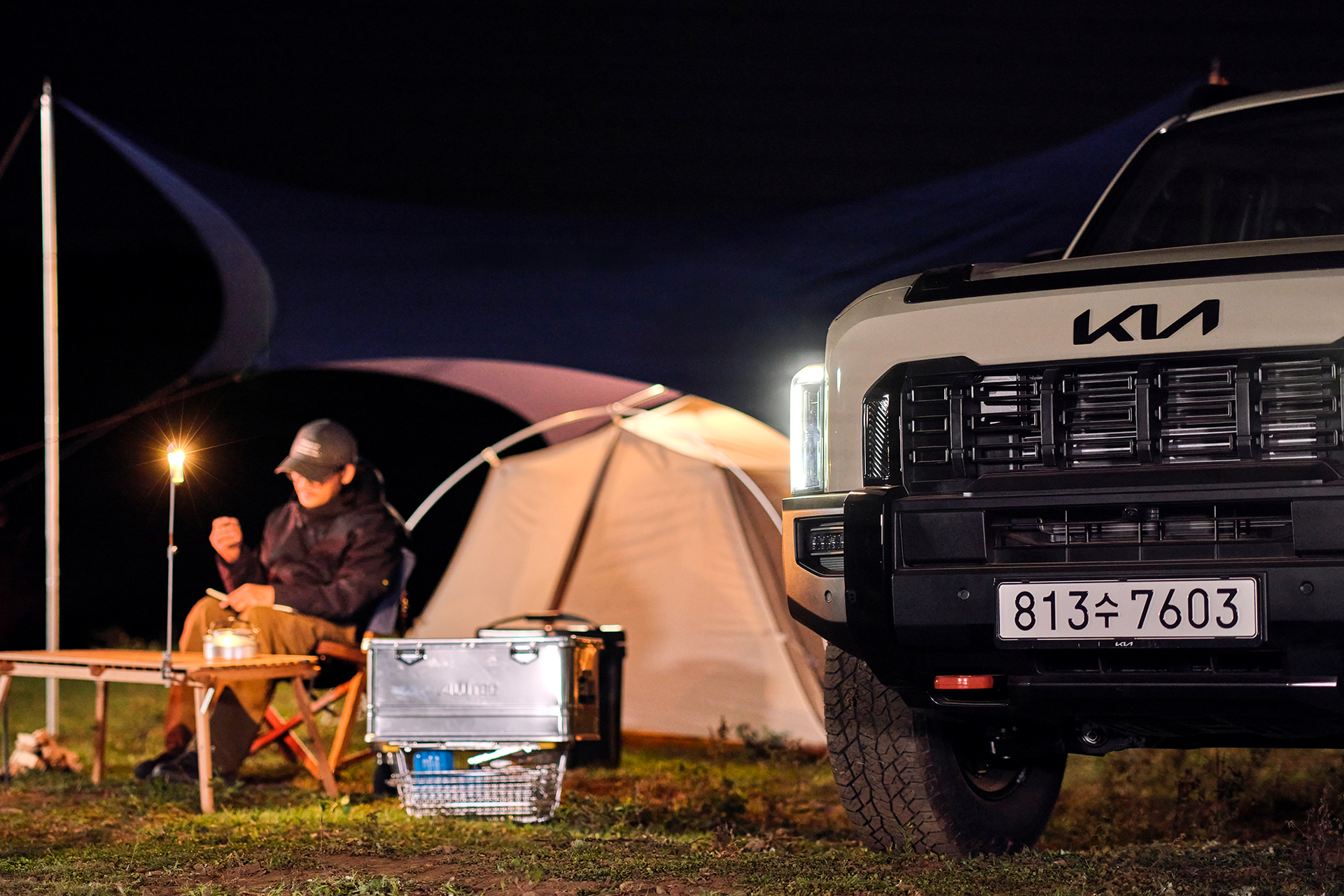
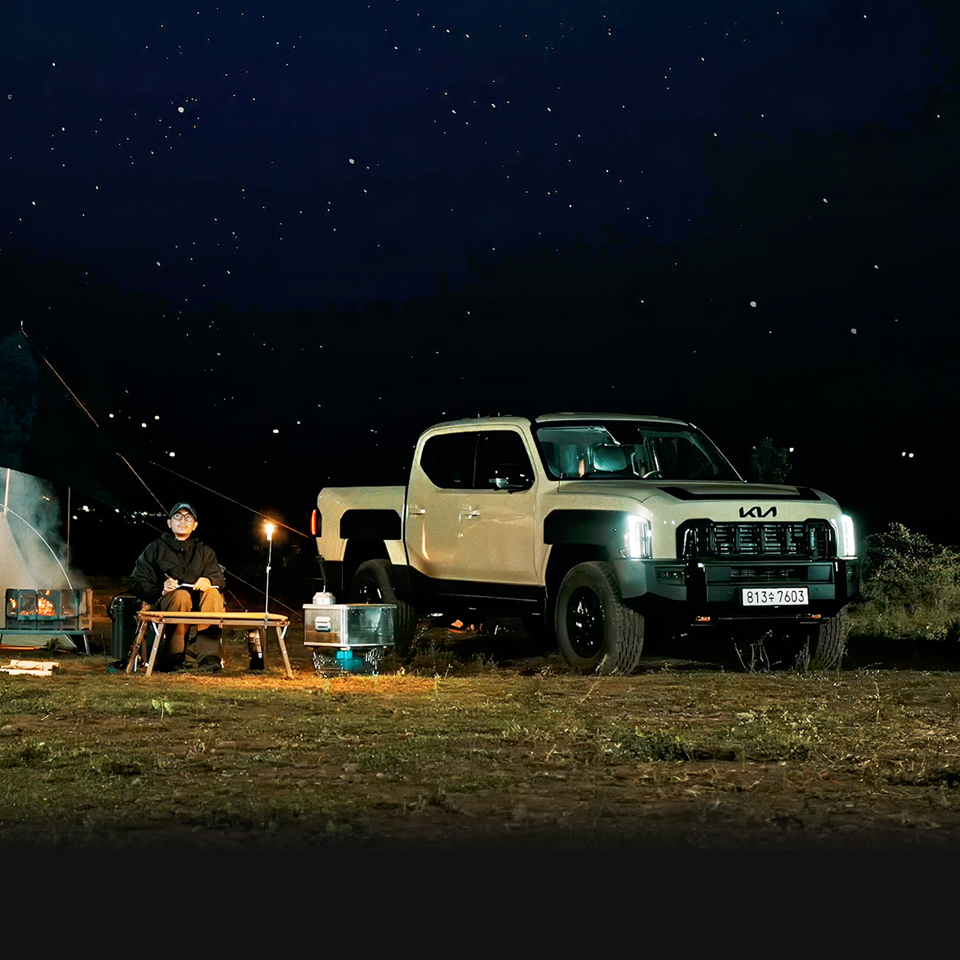
As the sun sets, Jeju’s landscape takes on a different atmosphere than during the day. The vivid colors of the surroundings gradually soften, and the lights at the campsites come on one by one. The sound of the wind rustling through the trees and the small lights glowing in the darkness create a cozy, intimate ambiance. ACAM wraps up the day warmly at the campsite he has set up using his own camping gear.
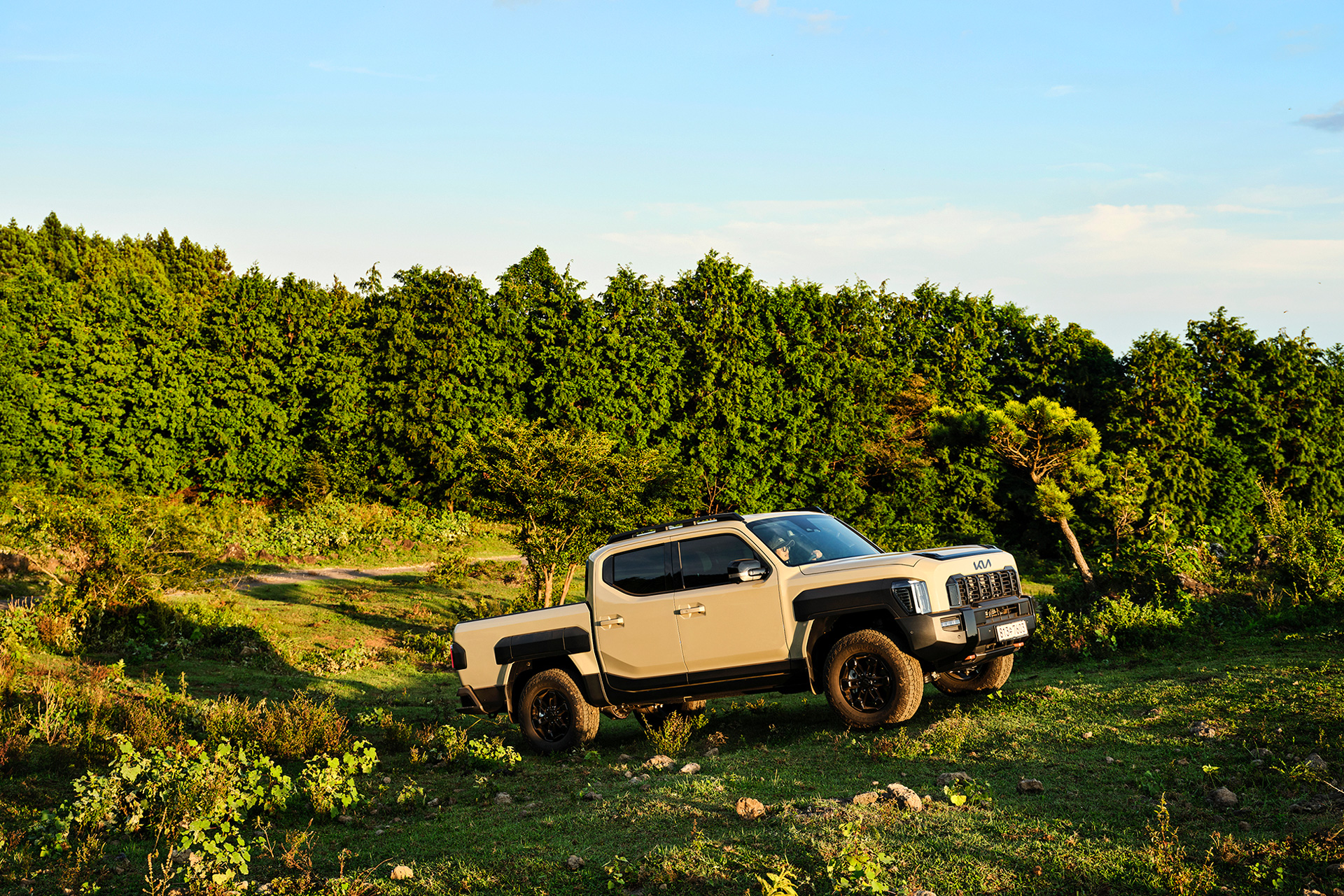
Throughout ACAM’s day, the Tasman played several different roles. At the start of the trip, it carried his camping gear, and on Jeju’s paved roads, it provided a comfortable ride. On unpaved roads, the X-Pro trim’s off-road capabilities helped him reach his destination with confidence. Once at the campsite, the Tasman’s spacious cargo bed and convenient features made his camping experience more comfortable.
What was particularly impressive about this trip was that the Tasman’s appeal was just as evident on ordinary roads as it was when navigating rough terrain. The joy of camping doesn’t begin only after you arrive at your destination. Everything—from the moment you prepare your favorite gear, to the time spent traveling and encountering new scenery, to the process of creating your own space at your destination—is part of the journey. The Tasman quietly fulfilled the role required for each of these moments.
There’s no single “right” way to enjoy camping. A lighthearted getaway is great, and so is a camping trip where you load up on your favorite gear and create your own personal space. What matters is planning your trip the way you want and fully enjoying that time. That was exactly the case for ACAM’s day spent driving along Jeju’s coastal roads, passing between stone walls, and staying close to nature. From its spacious cargo bed and comfortable on-road driving to its off-road performance when needed, the Tasman showcased its diverse charms from the moment the camping preparations began until the very end.

This Jeju camping trip may be just one example of the Tasman’s countless possibilities. After all, the nature of a trip with the Tasman will vary depending on what gear you load, which roads you take, and where you spend your days. Just as ACAM created his own unique camping experience in Jeju, we look forward to the new travel experiences the Tasman will create as it meets a variety of tastes in the future.
Photo: Sangkuk Park