SDV (Software Defined Vehicle) is a next-generation vehicle whose functions and performance can be controlled and continuously enhanced through software.
While the features of conventional vehicles are largely determined at the time of delivery, SDVs can add new functions or improve performance through OTA (Over-the-Air) updates. They also enable personalized services based on vehicle data, more advanced autonomous driving capabilities, and enhanced in-vehicle digital experiences.
Hyundai Motor Group views SDVs as a core foundation for future mobility innovation and is advancing related technologies to enable vehicles to evolve continuously as software platforms.
SDx (Software Defined Everything) is a future mobility concept that connects and integrates not only vehicles, but also a wide range of modes of transportation, services, and infrastructure through software.
Going beyond SDVs, Hyundai Motor Group is pursuing an SDx strategy that connects diverse areas—including vehicles, PBVs, robots, urban air mobility (UAM), and smart cities—within a single software ecosystem.
Through this approach, users can experience seamless services even when changing modes of transportation, while benefiting from a safer and more efficient mobility environment.
The most distinctive feature of software-defined mobility is its ability to continuously provide new functions and services even after a vehicle has been purchased.
Through OTA updates, vehicle performance can be enhanced and new services can be added. Personalized services tailored to drivers’ usage patterns can also be provided. In addition, connectivity among vehicles, mobile devices, and cloud services delivers a more convenient mobility experience.
Hyundai Motor Group aims to provide safer and more convenient experiences throughout the entire vehicle ownership journey, based on software technologies.
In the future automotive industry, software is becoming a key factor in determining a vehicle’s competitiveness, alongside hardware.
Key features of future vehicles—including electrification, autonomous driving, connected services, and in-vehicle infotainment—are all enabled by software. Software also makes it possible to enhance vehicle functions and expand services even after launch, delivering continuous value to customers.
In response to these changes, Hyundai Motor Group is transitioning its vehicles and services toward a software-defined approach and focusing on technology development to lead the future mobility ecosystem.
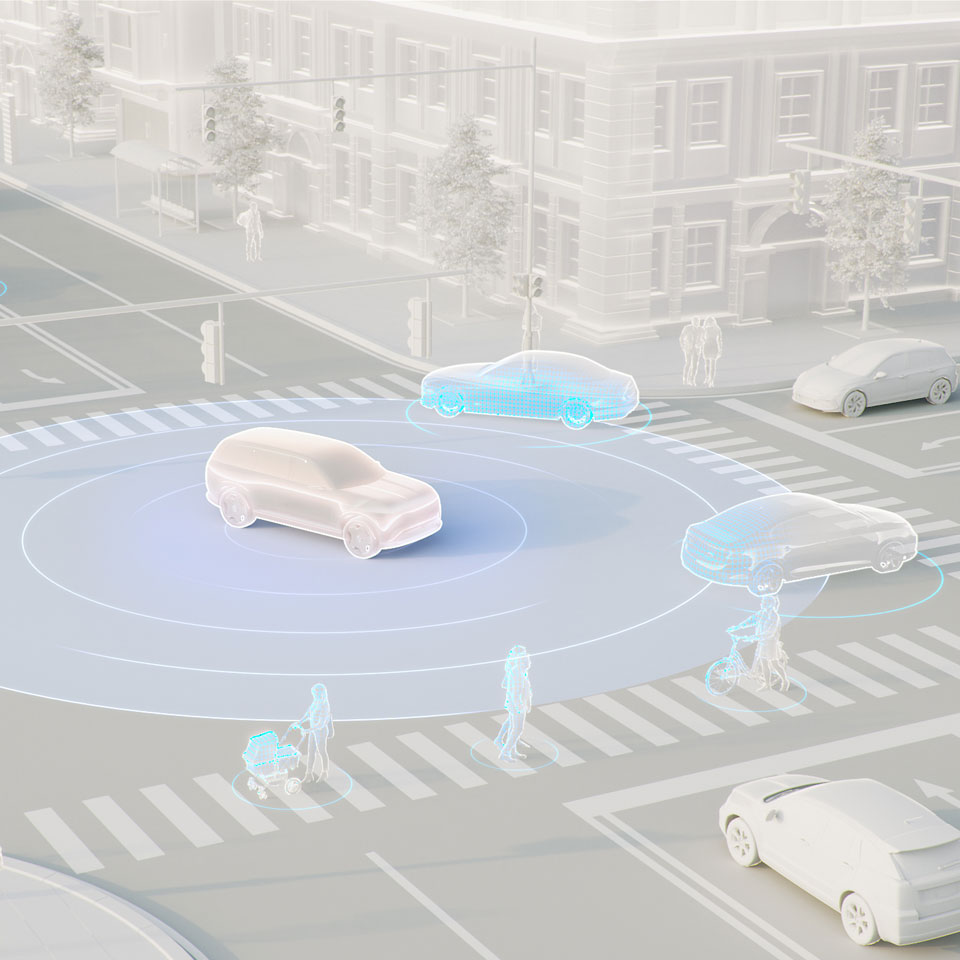
AI and software form the core foundation for advancing autonomous driving technology by learning from data collected on real roads and continuously improving the ability to make decisions in a wide range of driving situations.
Hyundai Motor Group is building a Data Flywheel system that collects, analyzes, and learns from real-world driving data to enhance AI performance, and then incorporates the improvements back into vehicle development.
In particular, the Group identifies driving situations that AI has not recognized or finds difficult to assess, uses them for training, and repeatedly validates and applies improved models to enhance the maturity of autonomous driving technology.
Hyundai Motor Group is building an integrated mobility ecosystem that connects vehicles, users, services, and infrastructure based on its SDV and SDx strategies.
To achieve this, the Group is developing a vehicle operating system and next-generation electrical and electronic (E&E) architecture, while using cloud and data platforms to link a wide range of mobility services.
Ultimately, Hyundai Motor Group aims to create an environment in which diverse modes of mobility—including vehicles, robots, and PBVs—are connected through a single software platform, expanding freedom of movement and creating new customer value.
The Data Flywheel is a virtuous cycle in which driving data is collected from mass-produced vehicles, analyzed and used for training to enhance AI performance, and then incorporated back into vehicle development.
Hyundai Motor Group selects driving situations from the collected data that AI has not recognized or finds difficult to assess and uses them for training. The Group continuously improves its models whenever new challenging scenarios are identified.
In addition to training, it is also advancing the validation process by using technologies that recreate real-world driving environments in virtual spaces.
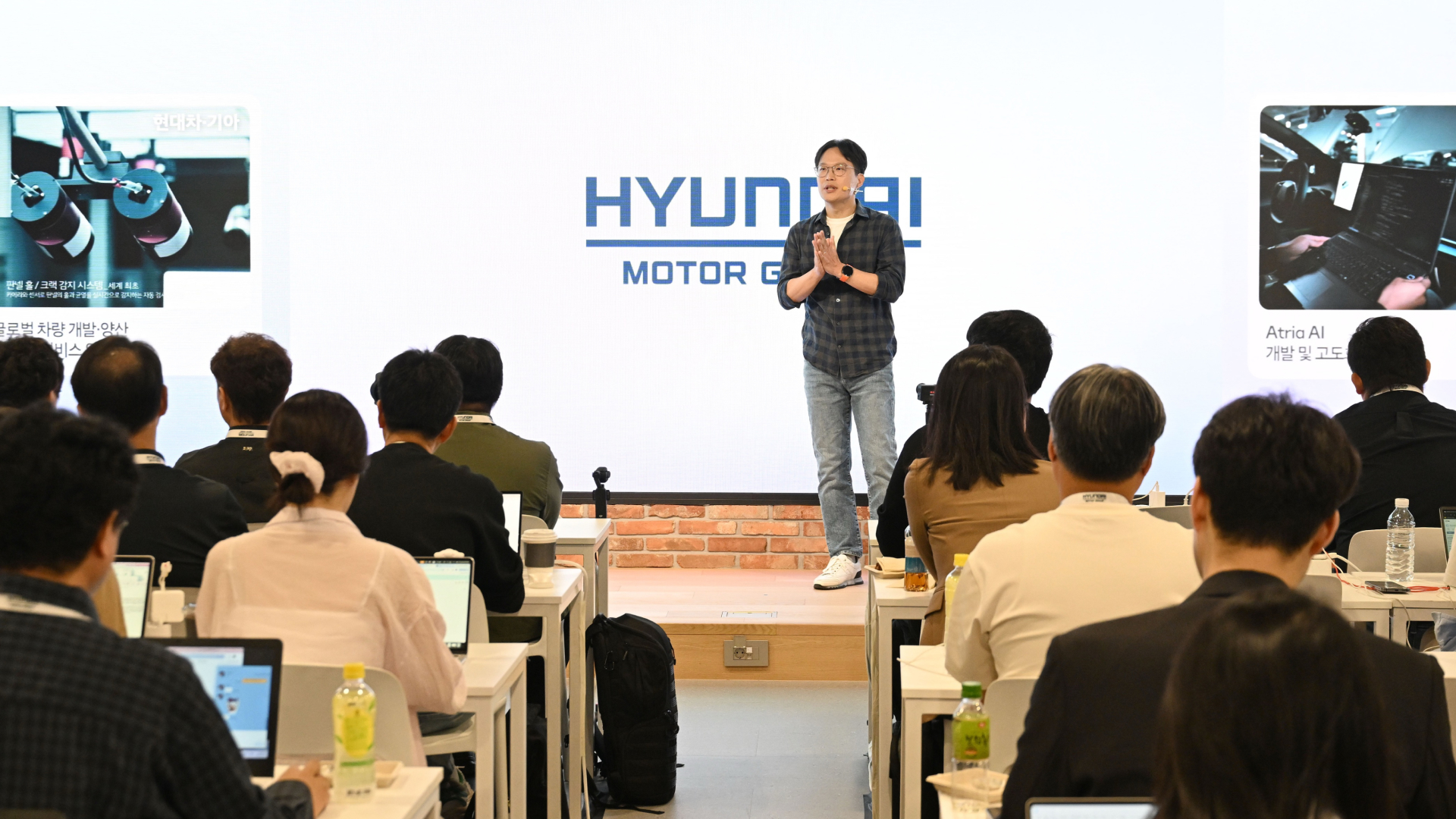
This Data Flywheel serves as a core foundation for continuously enhancing the performance of Atria AI, an end-to-end (E2E) autonomous driving system jointly developed by Hyundai Motor Group and 42dot.